
Article Content
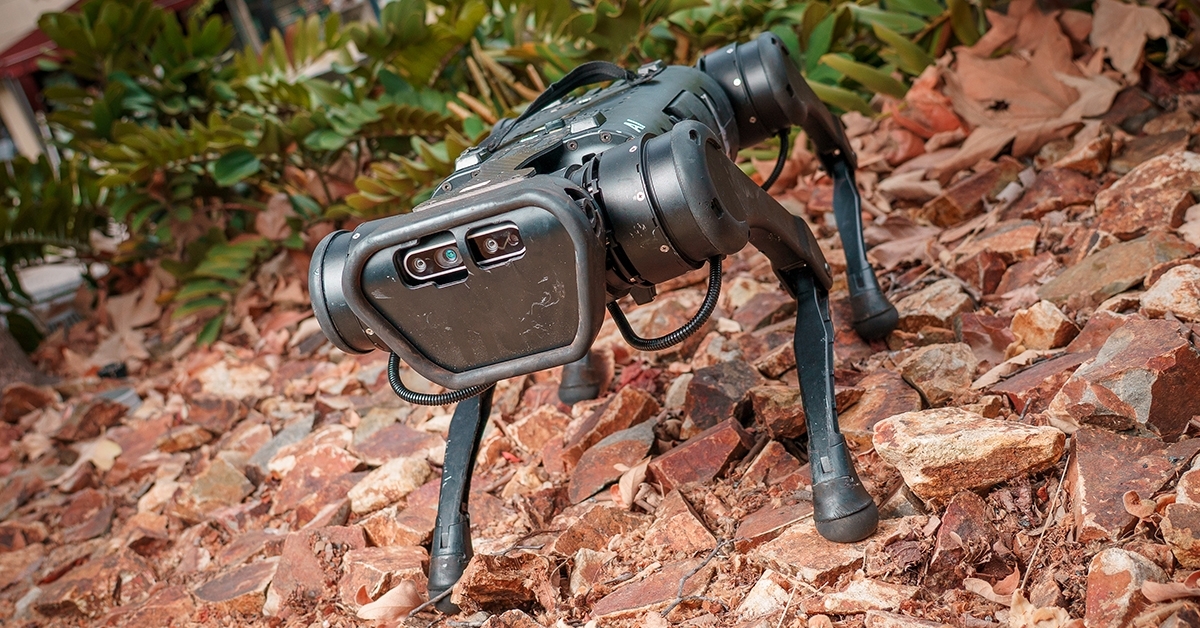
A team led by the University of California San Diego has developed a new system of algorithms that enables four-legged robots to walk and run on challenging terrain while avoiding both static and moving obstacles.
In tests, the system guided a robot to maneuver autonomously and swiftly across sandy surfaces, gravel, grass, and bumpy dirt hills covered with branches and fallen leaves without bumping into poles, trees, shrubs, boulders, benches or people. The robot also navigated a busy office space without bumping into boxes, desks or chairs.
The work brings researchers a step closer to building robots that can perform search and rescue missions or collect information in places that are too dangerous or difficult for humans.
The team will present its work at the 2022 International Conference on Intelligent Robots and Systems (IROS),…


